Ceylon Orthodox Black Tea: Whole Leaf & Broken Leaf Grades
From the long, wiry OP to the well-balanced BOP — a tour of the orthodox whole-leaf and broken-leaf grades that define classic Ceylon black tea.
Orthodox manufacture is the traditional way of making Ceylon black tea: the leaf is withered, rolled and twisted so that the cell juices are released gently, preserving aroma and the integrity of the leaf. The result is a spectrum of grades that runs from large, intact leaves to neat broken pieces.
Whole leaf grades
These are the most leaf-forward, aromatic and delicate teas — prized for character that varies with the growing district.
| Grade | Stands for | Character |
|---|---|---|
| OPA | Orange Pekoe 'A' | Large and slightly open leaf pieces, representing higher quality. |
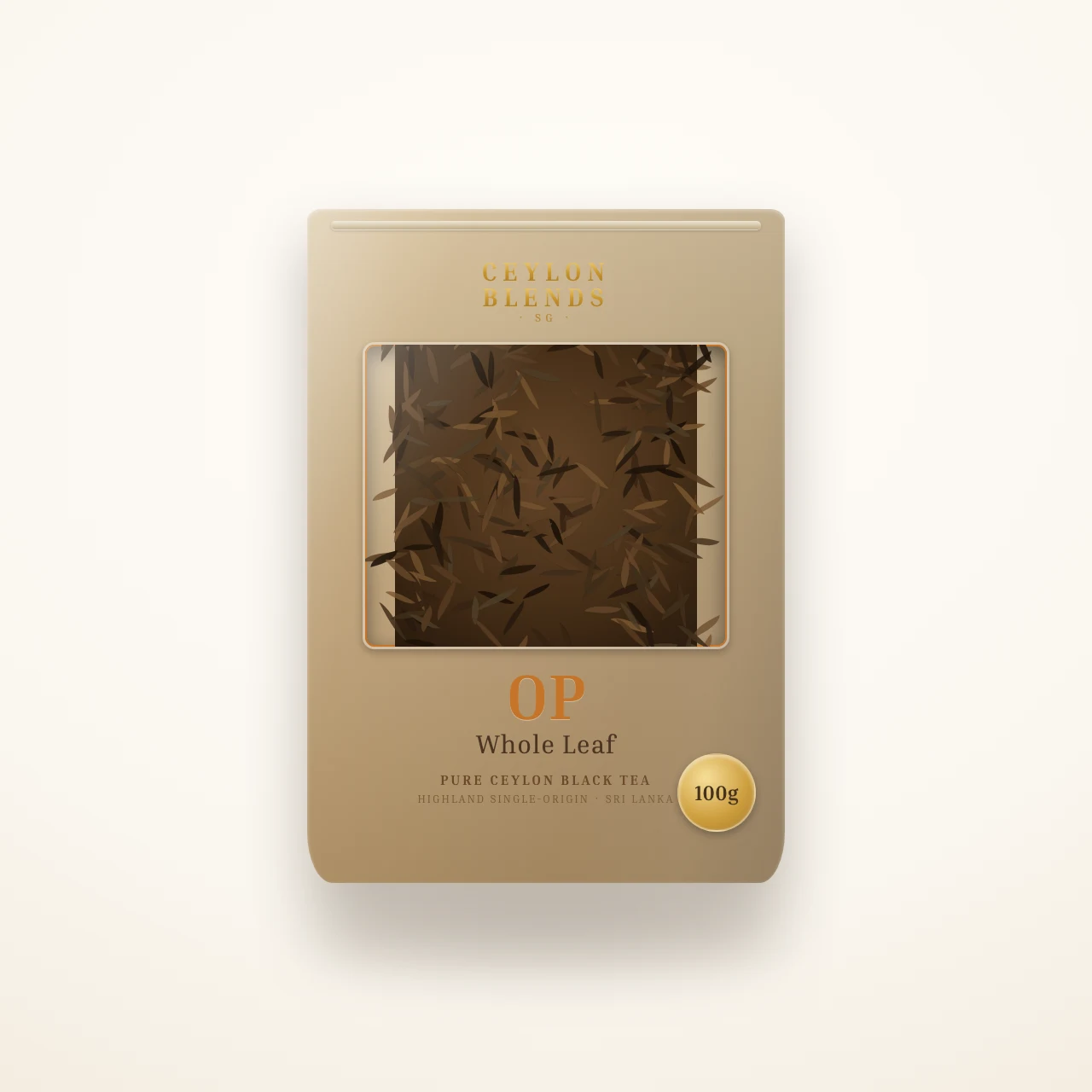
| OP | Orange Pekoe | A whole leaf, well-twisted tea. A delicate brew that varies in taste according to the different districts. |
| OP1 | Orange Pekoe One | Long, wiry, well or partly twisted tea. |
| PEK | Pekoe | Twisted and coarse tea. |
| PEK-1 | Flowery Pekoe | Similar to Pekoe but smaller in size. |
Broken leaf grades
Broken grades are made of smaller leaf pieces. They brew faster than whole leaf and are loved for striking a balance between aroma, taste and strength.
| Grade | Stands for | Character |
|---|---|---|
| BOP | Broken Orange Pekoe | Small or broken pieces of leaves, offering a good balance of taste and strength. |
| BOP1 | Broken Orange Pekoe One | A well-twisted semi-leaf tea, generally from the low country, with a mild malty taste. |
| FBOP | Flowery Broken Orange Pekoe | Smaller than BOP1 with tips present; larger than FBOPF1. |
| FBOP1 | Flowery Broken Orange Pekoe One | Long, twisted, wiry leaf, fairly tippy. Longer than BOP1. |
If you enjoy a fragrant, characterful cup, start with the whole-leaf grades; if you want body and briskness without losing nuance, the broken grades are the everyday workhorses of Ceylon tea.
From our pantry